"Sinners" the Movie and the Dreamed-of Tabletop RPG
- 7 minutes read - 1292 wordsThere’s a movie that’s sat rent-free in my head for almost a year and half, and that’s pretty rare. It was Ryan Coogler’s film, “Sinners.” Two things have stuck with me about it.
- It’s a Black movie. There’s a whole culture not native to my own that Coogler shared with the world. It’s a culture removed by racial difference and also time to my experience. These are someone else’s grandparents' stories. And I’m so thankful to have learned more. But the film is also in conversation with some of the academic/literary learnings I have: Br’er Rabbit as an avatar of “Rabbit,” an African folk trickster known for his wiles; the power of haint blue; the food magic of gumbo.
- I remain convinced that the “Sinners” universe would be one of the best tabletop RPG (character sheets and funny dice) or card-and-token games ever.
Our friend Ryan wrote his own take on the film over at Signal Watch, worth a read alongside.
Sharing Black Tapestry
Sinners gave a wide, and largely white, audience a palatable and relatable way into the supernatural mystery and richness of the spiritual world the Africans brought with them when they were made to build the Gulf Coast.
I was initially turned off because it seemed like Oscar bait premised on already-acknowledged-as-talented actor Michael B. Jordan doing the Hayley Mills or Jeremy Irons “two characters, egad!” bit. But then I heard about the structure of “Night of the Living Dead” under Jim Crow and I was intrigued. Early reviews were glowing so Lauren and I caught it in Dolby at Lincoln Center and was blown away.
To say that the acting was great or the cinematography was great or the directing was great is just one more drop in an ocean at this time. In my book, you can’t tell a great American tale unless you talk about capitalism, race, and Christianity and this film plays firmly in that Venn diagram overlap.
But there was something more. It was powerful to see some of the tropes and themes and cultural values from my childhood in Louisiana (and Houston too) that exist unspoken in the Gulf coastal South play out on the big screen.
Smoke’s love interest (Annie) is straight-up a healing woman, a medicine woman, deeply rooted in the African traditions that recognize that food is medicine (welcome to sharing this point of view mister RFK Jr.). She was a sorceress in syncretic dialog between the elder, African traditions and Christianity. Praise to Wunmi Mosaku. It was a real highlight when one character lets it be known that she wasn’t a fan of New Orleanian hoodoo magic and she therefore wasn’t a fan of Annie. AKA: “Hey white people, black people have never been a monolith, just like you.”
And the film makes a wonderful reference to the notion of being dispossessed of land by caste or race. I’ll always remember that the biggest critics against the apartheid regime when I was a boy were U2, the Irish sense of displacement resonating with another’s sense of displacement. There’s an empathetic filament between those communities that recognizes something in common.
When I saw porches with haint blue paint on them, I could see Coogler tipping his hat to Gullah Culture. I remember those paint blue effects in and around the New Orleans in my childhood. I remember thinking that the ceilings look like the sky. Me and the ‘haints were fooled both, I guess.
If you don’t know, southern or African cultural tropes, it’s a great movie, highly entertaining. But if you can see that Coogler is using this movie to tell you something deep and something rich about Gulf Coast and black culture there’s so much more to enjoy. I’m sure I’m not aware of .001% of all the messages that the community speaking to itself says, but where my upbringing touched ever so slightly into that world, I love seeing it on screen.
“Sinners” Role-Playing Game
I grew up in the ’90s playing Steve Jackson games RPG‘s and the one that “Sinners” most reminds me of is “Rifts.” Short summary: Nuclear holocaust opens up rifts between dimensions and space and beings from fantasy, mecha, horror all find themselves trading and fighting in post-Apocalypse Earth. Thus every character has a “race” and an “occupation.” Rifts could be sprawling. You could have, literally, a Martian bounty hunter, perhaps a “Martian Manhunter,” if you will. You could have a dragon running a bar.
It was sprawling.
But “Sinners” reminded me so much of how these games would go. The first third is building the party, the middle third is the battle or the adventure, and the final third is the harvesting of XP and arming up for your next outing. In that sprawling game system, you could easily imagine:
Protagonists
- Human, ex-Soldier (Black): Smoke
- Human, ex-Soldier (Black): Stack
- Human, Musical Sorcerer (Black): Preacher Boy
- Human, Sharecropper/Bouncer (Black): Cornbread
- Human, Sorceress (Gullah-Black?):
- Human, Brimstone Preacher (Black):
- Human, Vampire Hunter (Choctaw):
Antagonists
- Vampire, Leader (Dispossessed Irish):
- Vampire, Thrall (White-passing Black):
- Human, Klansman (White)
- Human, Corrupt Businessman
NPCs
- Town-folks
- Bar owners
- General store proprietors
In the same way that Rifts played with living in the world where there’s ambient psychokinetic energy everywhere that could create magic or spiritual effects, the world of “Sinners” is laden, in its very humidity, with that psychokinetic burden born out of the confluence of the cultures that intersected in the Jim Crow Gulf.
The Irish vampire is a part of it, the time-bending musicians are part of it, the sorceress giving hoodoo pouches is part of it, the Choctaw mounted trackers are part of it. It’s all part of a rich supernatural world set in this tiny Southern universe against an imposing forest-and-Cottonfield world.
I had such fun with this idea, I decided to try to build some descriptions that I’d pair with some of the film’s extraordinary stills. Basically, what if you used these shots on a Magic the Gathering card.
Hypothetical Cards
Fire and Brimstone Preacher
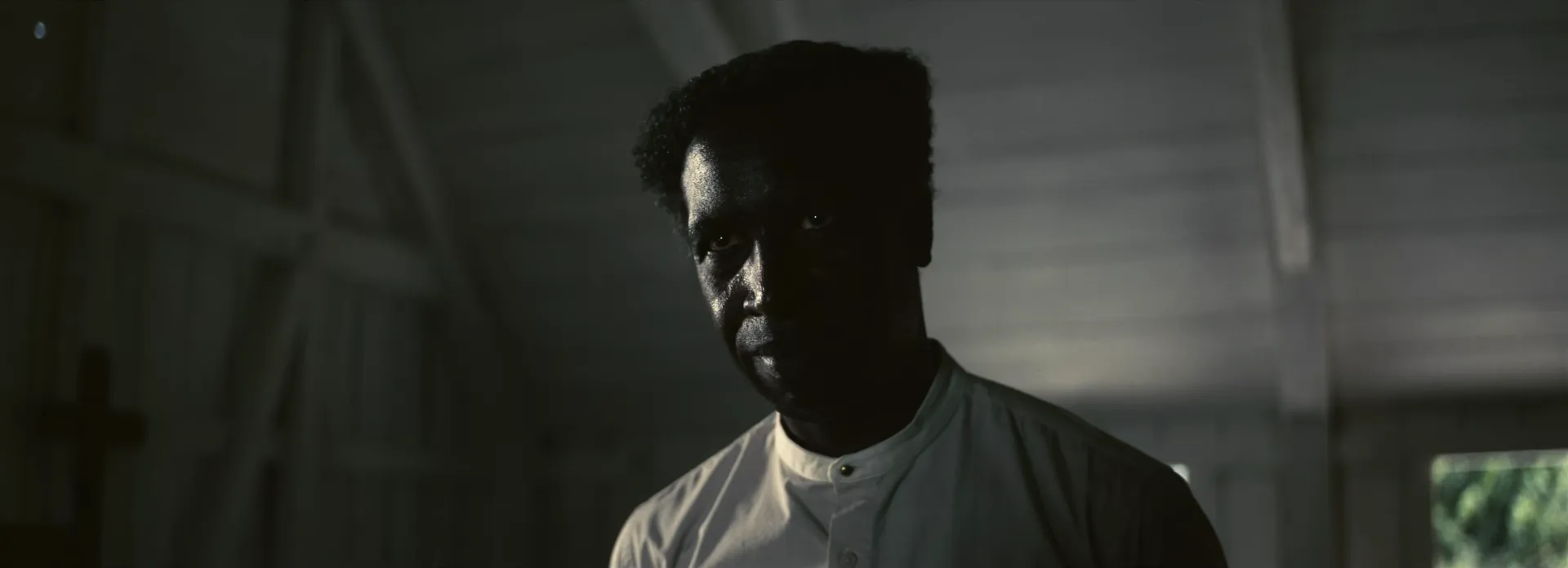
Preacher silhouette in church.
A preacher knows that Hell is real. Opening the awe and reverence in his congregation allows him to channel the Holy Spirit. Multiply spiritual attacks strength +1 for each CONGREGANT in his flock.
Sorceress
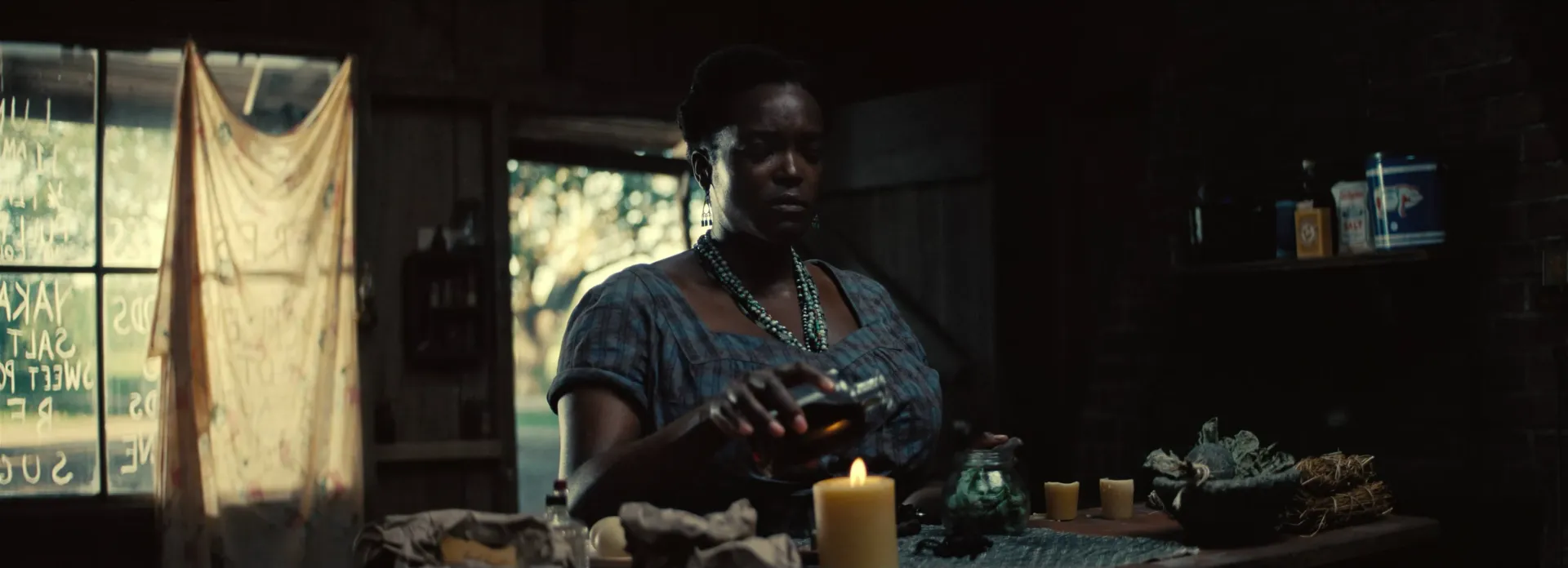
Annie mixing hoodoo remedy by candlelight.
Sorceress: Sorceresses feel the magic in the earth and channel it through food, tinctures, and pouches. Healing scales with INTelligence and DEXterity
Hunter
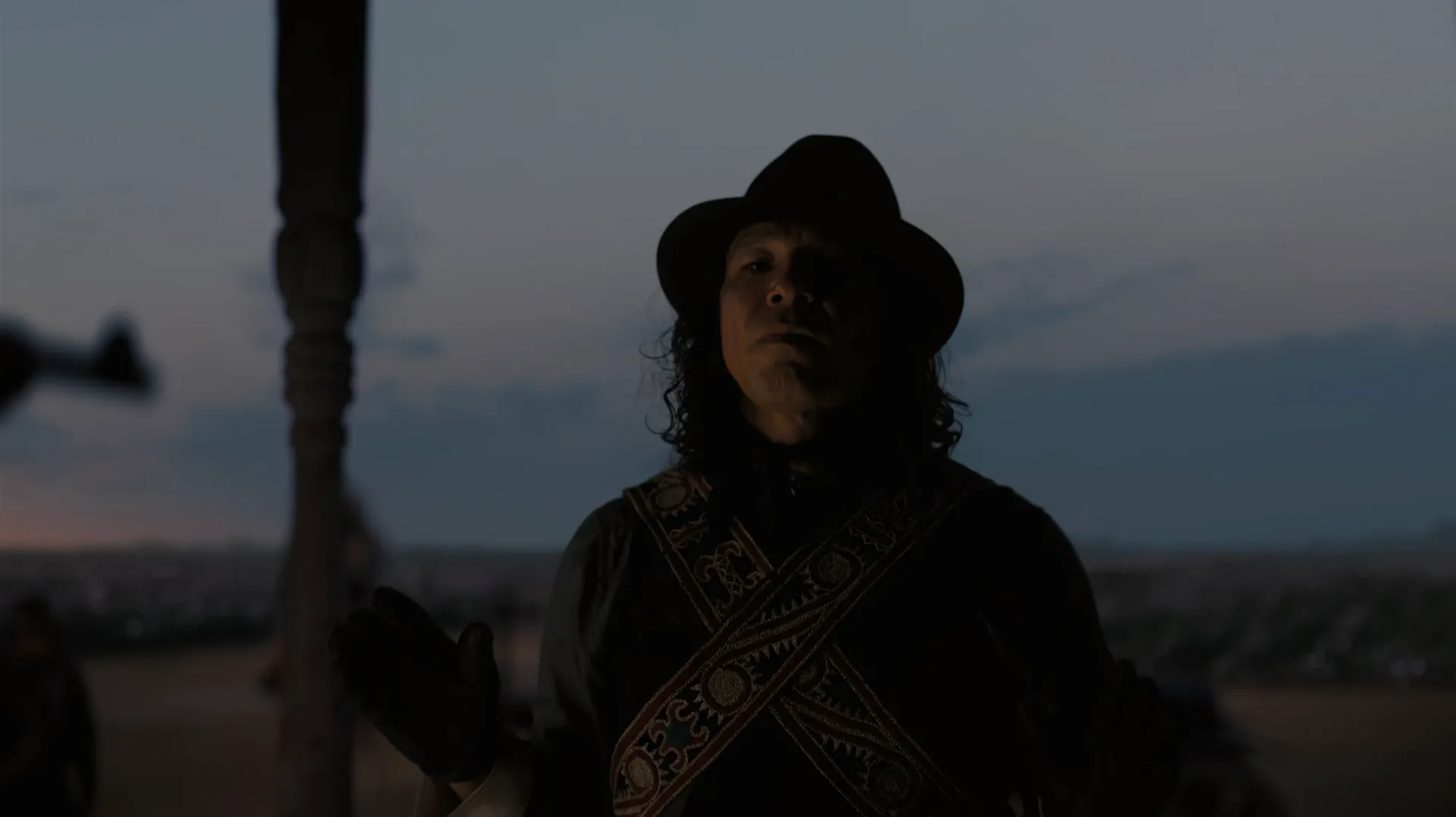
Choctaw Warrior.
The Choctaw nation are no strangers to the evil of men. But they’re no strangers to the supernatural evils of this world either. Their people braved the New World with only wit, spears, and arrows. Now they have rifles and horses. The bravery has never ebbed.
Vampire Leader
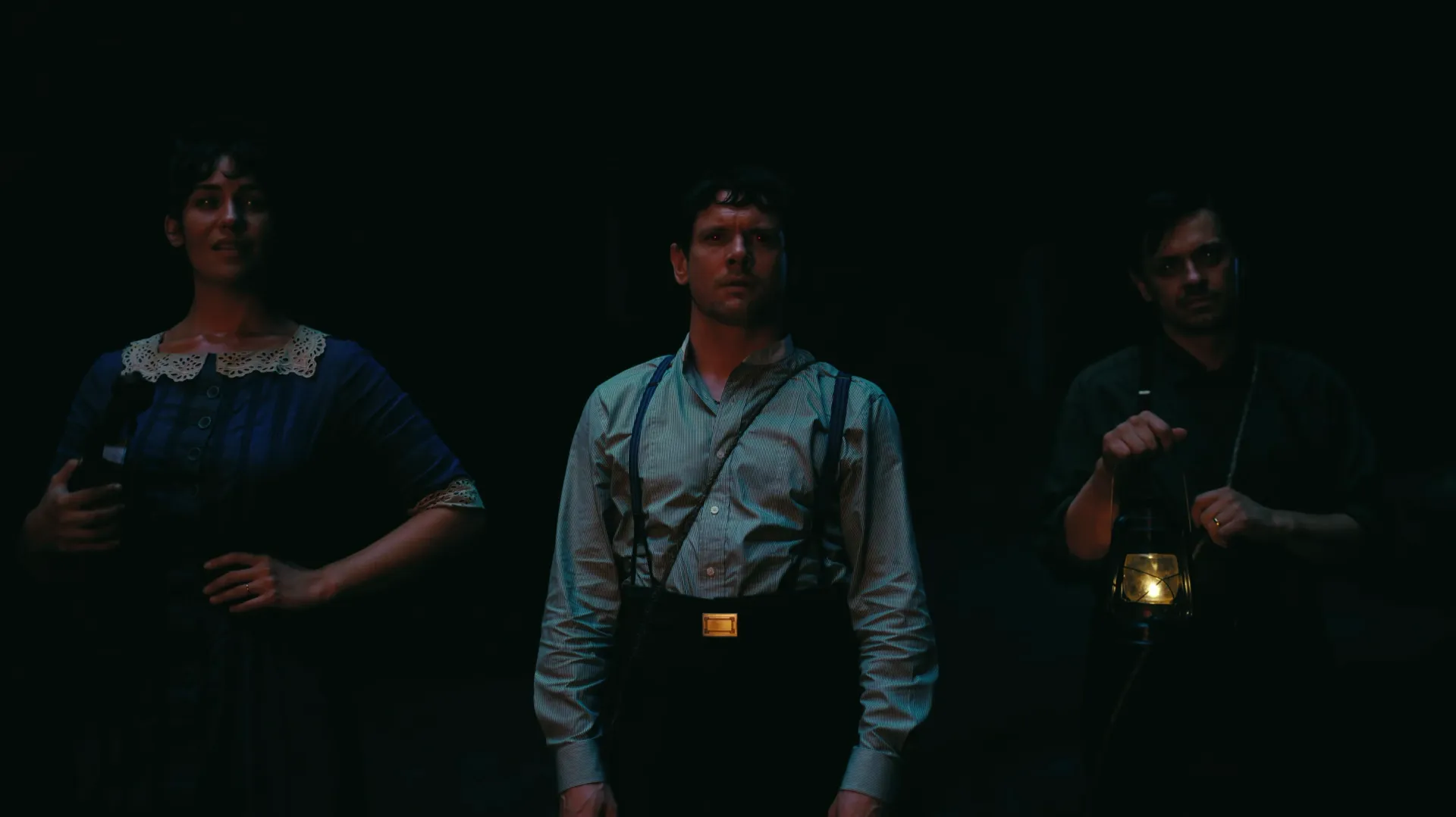
Vampire leader and thralls
A Vampire’s coterie gives him strength. They are the dark side to a preacher. For each thrall, increase spiritual attacks +1
Musical Sorcerer
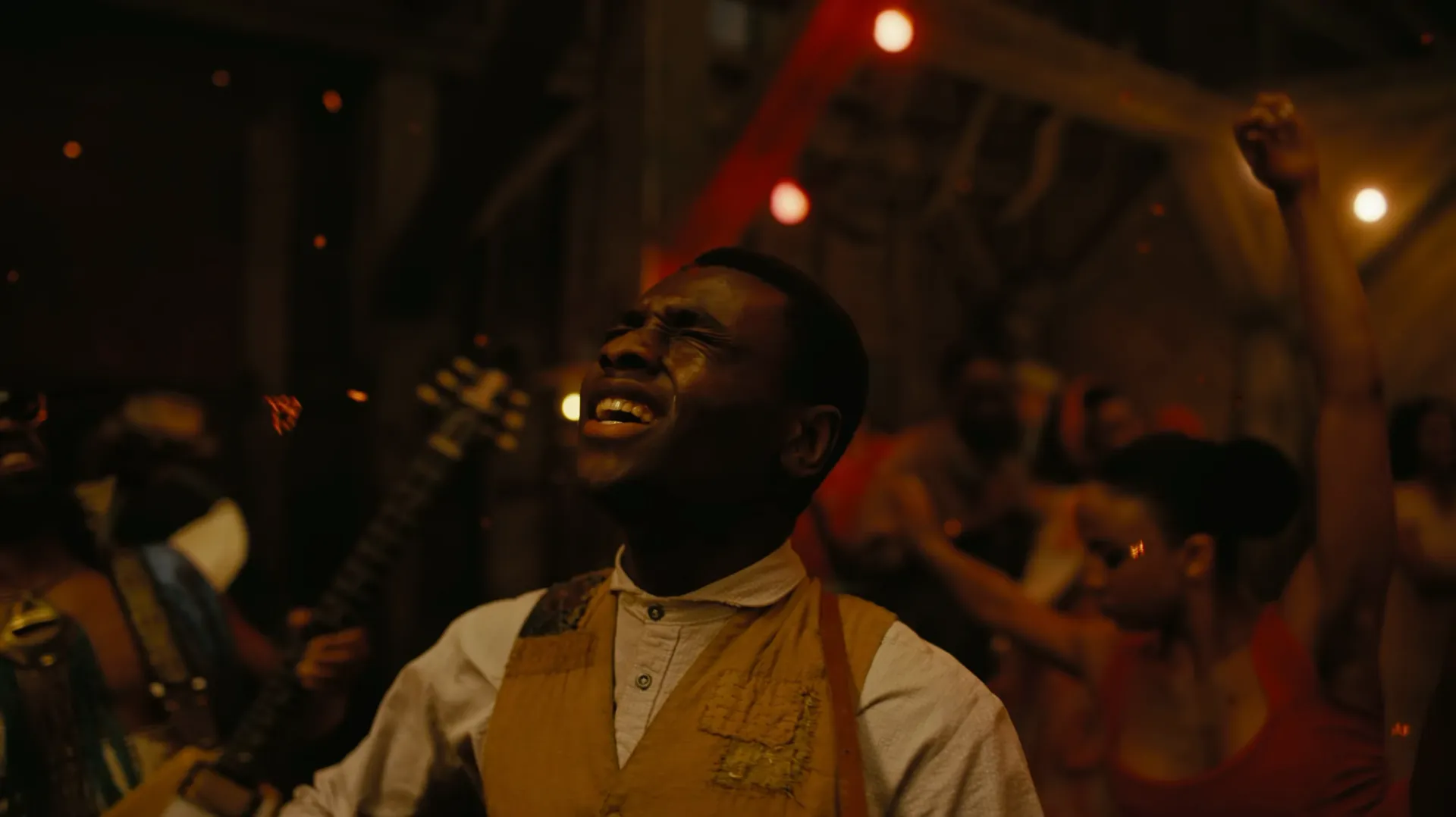
Sammie singing, ecstatic, juke joint closeup.
The musical sorcerer channels psychokinetic energy to open rifts across time and space to bring humans across time and space – with their weapons and magic – to help in the battle against the Evil. Some music can even dumbfound a thrall coterie and leave them ripe for purging.
Corrupt Businessman
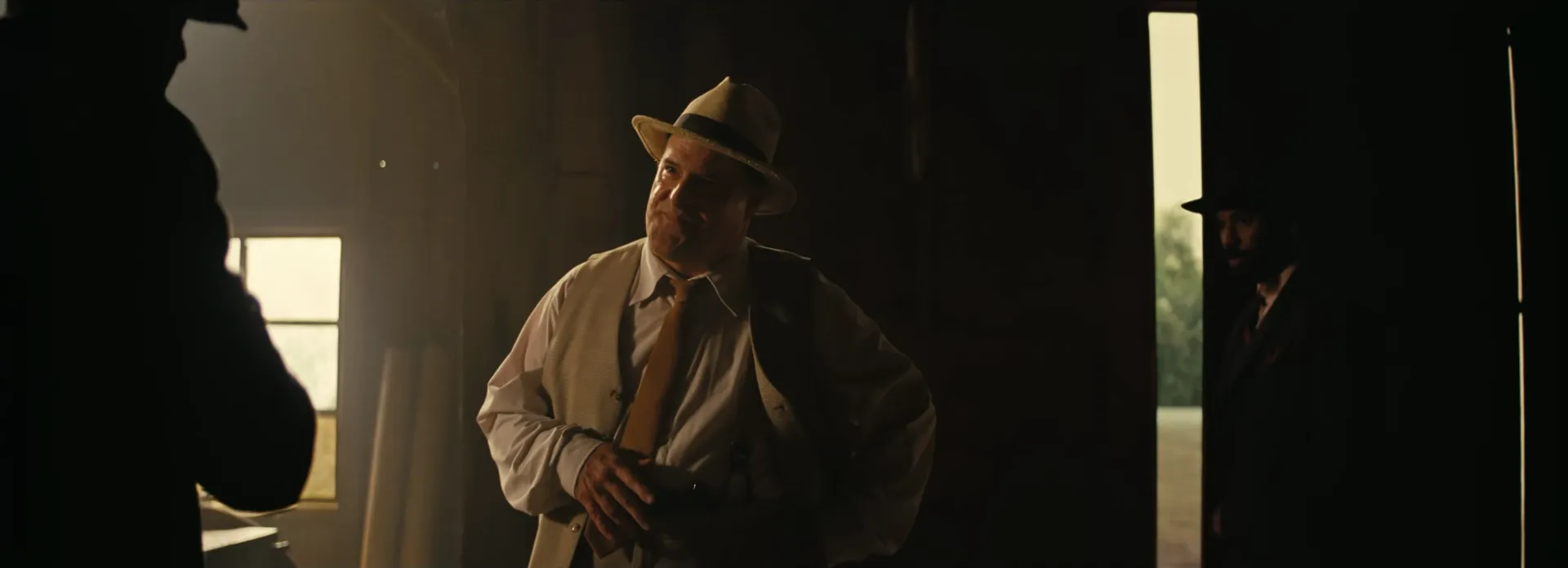
White mill buyer in fedora, doorway.
You say there’s no magic in business? Compound interest would disagree.
Spoiler
Thrall
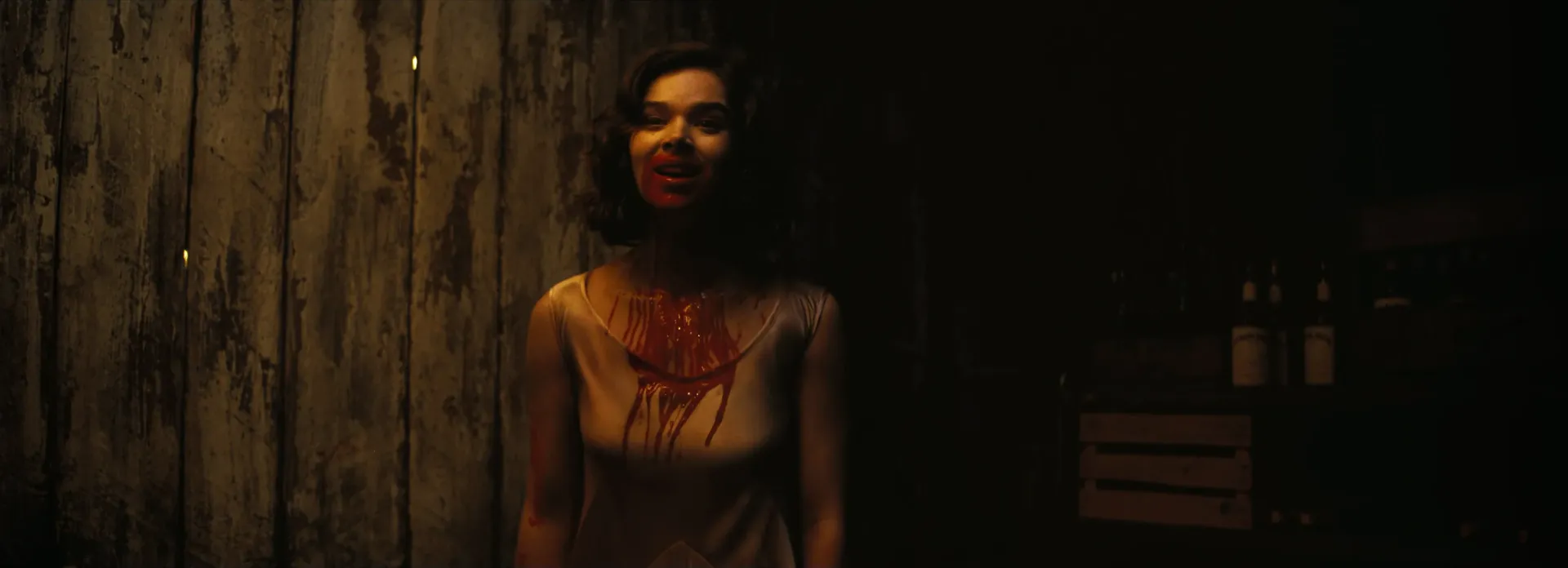
Mary, bloodied, after turning.
The thrall is a human turned by a vampire. They enhance the leader’s power, but are formidable threats in their own right, too.
Conclusion
I loved this movie, I assume it’s obvious. And I really love thinking about the movie minus the horror per se of the film. I just like the world. I guess that’s why I want to imagine more adventures there in an RPG.