This Is Not The Computer For You: An Appreciation of Struggle
- 7 minutes read - 1468 wordsSam Henri Gold recently published a post about Apple’s new MacBook Neo: a lower-power, but decidedly not less-than, version of the Apple hardware I’ve been loving for almost two decades now. It comes in at $599, against the $3,000 to $7,000 you’d pay further up the line.
In a surprisingly touching, insightful piece, Gold makes the case: yes, the Neo’s underpowered, but for the person this machine is actually for, that doesn’t matter. Gold suggests that while Apple’s marketing team is making one pact with Wall Street and the computer hardware press, it’s making a different, and more sacred pact, with the computer engineers of tomorrow. The Neo is a gateway, the cheapest possible ticket, a promissory note to the theatre of high tech.
He recounts how, in his own early days, he pushed a secondhand Macintosh far past its limits, enduring interminable waits as it crunched through computations it had no business running but that he kept directing to it. But his curiosity carried him through the lag and drag and ultimately the little computer that could allowed him to play, to explore, and to discover.
I recognized myself in that story. I too lived something like it a generation or two earlier, on an underpowered PC of my own. Whatever capacity I’ve since found to make computing machinery dance and sing wasn’t stunted by starting on a modest machine. If anything, I may be better at making machines work because I started on such an underpowered machine.
The limitations inspired me.
The limitations were the point, and Apple has made an affordable, gentle ramp into that wonderful world of limitations.
Gold’s essay is worth reading in full, but a couple of lines are worth pulling out on their own:
Nobody starts in the right place. You don’t begin with the correct tool and work sensibly within its constraints until you organically graduate to a more capable one. That is not how obsession works. Obsession works by taking whatever is available and pressing on it until it either breaks or reveals something. The machine’s limits become a map of the territory. You learn what computing actually costs by paying too much of it on hardware that can barely afford it.
— Sam Henri Gold, “This Is Not The Computer For You”
Here’s my own obsession’s story.
My First Underpowered PC
My family got its first home computer in the early ’90s (1992?), right as the IBM PC era was heating up: a Packard Bell 386SX running at a blistering 25MHz.
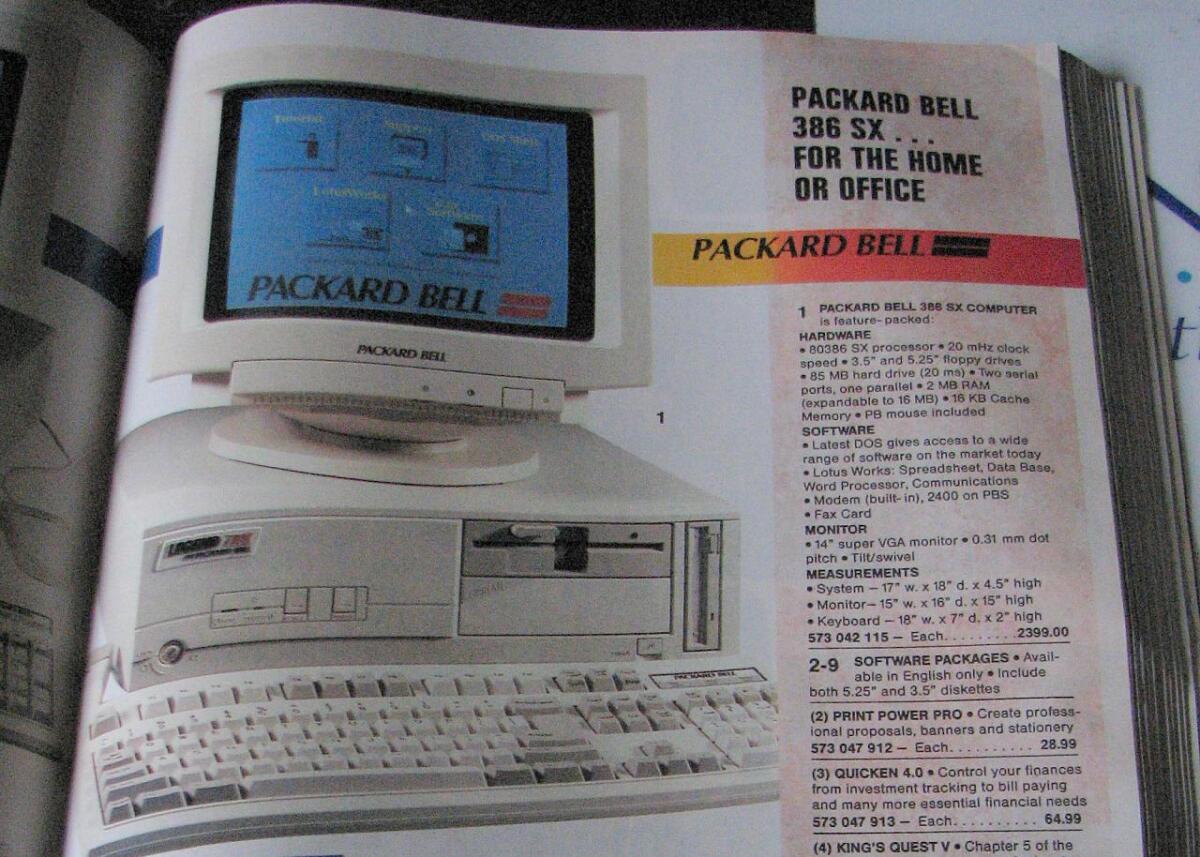
The catalog ad, in all its early-’90s glory.
Looking at this advertisement, I realize what an incredible investment this was. Two thousand late-Bush-administration-(the first)-bucks was nothing to sneeze at.
Also, look at the screen here, Packard Bell was installing their own framebuffer launcher to wallpaper over the user-unfriendliness of DOS. Windows still, at this point, had not shipped the mass-public-connecting Windows 3.1. There’s no multitasking here. Your memory is the application you’re running and (hopefully) a low-footprint of TSRs (terminate and stay resident) applications.
It didn’t take long before I had learned MS-DOS 5.0 (cd \, a:, type autoexec.bat). I could feel, even then, the command line’s CP/M-era lineage,
and I preferred the more honest way of running the machine.
That 386SX was fine for early 1992. I was playing VGA-remastered EGA games, the Monkey Island series chief among them.
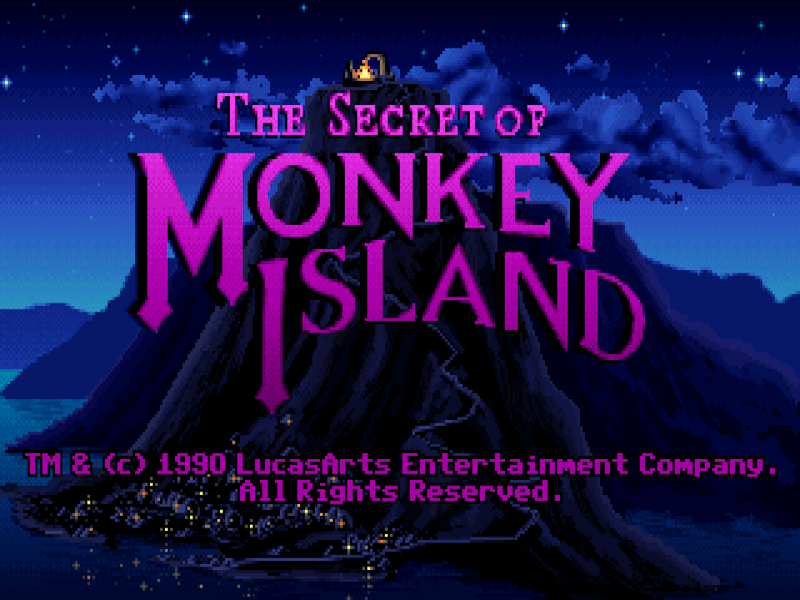
The Secret of Monkey Island, doing its best on VGA.
This was a generalist machine and wasn’t particularly high-powered (at that price point, you had to have a strong use case in mind). It was a general-purpose appliance, and featured a cheap version of just about everything.
And this is not a flaw.
Here were some of the specs:
- A hand-held OCR scanner (not quite ready to work)
- A really nice SVGA monitor — that part was not underwhelming. I’m guessing those helped sell the units.
- Standard 101-key and mouse
- No sound card: bleep and bloop were your sonic palette
- A 2400-baud model that was glacial even by the standards of 1992
- A hard drive that could save you from doing the disk-swap tango mid-game in order to move through various parts of the game dungeon
This platform constantly provided the experience of grasping and falling short. And that turned out to be the perfect education.
As I mentioned, basic navigation was best accomplished in DOS. But quickly I
started learning about what DOS was telling the computer when it started up. Because memory was
constrained, I learned the difference between extended and expanded memory
addressing. I learned to hand-tune AUTOEXEC.BAT and CONFIG.SYS, and to load
memory managers to squeeze out extra performance. Because the hard drive was
small, I learned the value of compression tools — LHA, ARJ, PKZIP —
and the discipline of managing a tight, sensibly-named directory tree inside
DOS’s eight-dot-three filename limit.
The limitations were the entire curriculum.
The first thing I swapped out was the modem. I went from 2400 baud to 14.4k so I could actually use the local bulletin board systems: downloading messages to read and reply to offline (A sweet application called “Blue Wave”), or just downloading files. Cool games, mostly, if I’m honest.
Installing the modem meant cracking the case open, working a card gently free with my fingers, and setting it back down in its bus slot — jumpers configured for the right address, learning by feel exactly how much pressure it took to seat a card correctly. It was an experience. In my sysadminning career, how many times would I later swap out a scorched memory unit.
Later, as a birthday gift, I ordered more memory and did the same delicate work to take the machine from 2MB to 4MB. That bought the 386SX a little more life.
And then one more upgrade later, I installed a Pro Audio Spectrum soundcard. It took the wonderful bleep 8-bit orchestra of Monkey Island from quirky and fun to lush and symphonic.
At the same time, the proto-internet world was getting more accessible. I was
now able to run the gorgeous Telemate program (tm.exe) to connect to my dial
up shell provider. Paired with GNU screen, I was able to do Unix pretty
much like I do to this very day. Once connected, I’d open a session and go
check email, Usenet news, IRC — whatever the board or the wider net had
to offer that night.
Then, in a cruel twist of fate, the machine started to fail.
The DX2 Rises
My dad, fortunately, had sprung for an extended warranty. In the latter months of its 18 month window (I gather), I took it in to Circuit City for repair, we brought it home, and within a short amount of time it broke again. Under the warranty and Texas’s lemon law (which I researched in one of the SX’s working phases), that was enough. I went back in and, at fifteen, laid out the warranty terms to the tech myself and argued that what I needed wasn’t another repair — I needed a replacement. Somehow, perhaps because of the paper trail I’d accumulated, the tech agreed. Circuit City had to make good, and the closest comparable machine on the floor was a 486DX2/66.
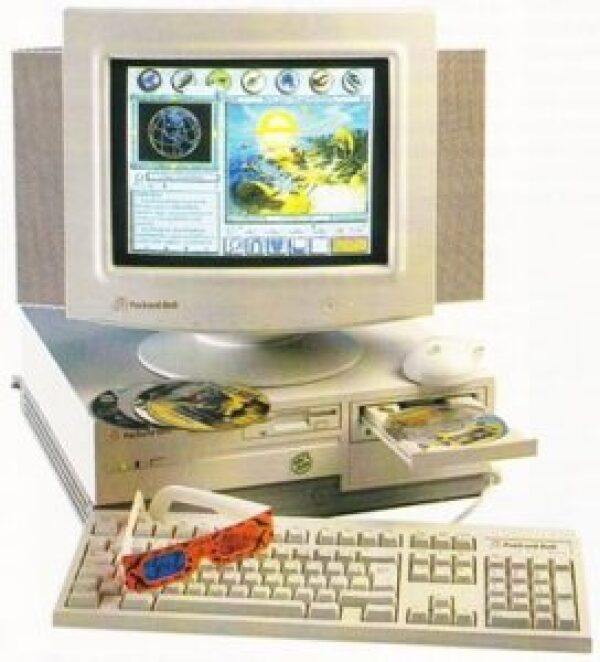
The 486DX2/66, my accidental upgrade.
Hat tip to “MDW” blog for the image. Amusingly, the post is from their “I Started With This Computer” story. It joins Gold’s and mine.
This would be like complaining that your VW Beetle kept having timing belt slippage and someone offering you a brand new Audi.
Overnight I had the finest computer on the block. I migrated the cards. Red Baron flight simulator finally ran the way it was supposed to. Realtime action games like Bullfrog’s “Syndicate” didn’t bog down during intense battles.
Every game that had choked and stuttered on the 386SX opened right up, and it felt like I’d earned it, because I had. Owing to those years of working inside constraints, having to understand exactly why the machine wouldn’t do what I wanted meant that I could now make it soar. Custom memory loaders, batch scripts to toggle between extended memory loading versus regular, etc. I had it figured out and ergonomic.
Gold’s rule assumes you get to pick your own constraints. Sometimes the more capable machine just drops in your lap, thanks to some shoddily sourced components.
Conclusion
Gold ends his piece:
The reviews can tell you what a computer is for. They have very little interest in what you might become because of one.
Neither the 386SX nor the 486DX2 was ever the right computer for the things I eventually wanted to do with computers. That was never really the point. These machines provided occasions — “befallings” — where the lessons they pointed to were the fields of possibility I was meant to explore.