My Most Favorite Episode of This American Life
- 7 minutes read - 1479 wordsPhoto Credit: Elan Rushkin
Starting over alone, anew, afresh, in California a half-lifetime ago, I came to find out that the maw of the weekend can swallow you whole if you’re not careful. There are so many hours that you can easily do nothing thanks to the embarrassing riches of having time enough to do anything in a state being chock-full of everything. In order to etch numbers in my sundial and create speedbumps on the slide to Monday, I invented orienting rituals like my Saturday night radio ritual.
So, on San Jose’s warm Summer-into-Fall nights, I found myself whiling away Saturday night with KQED playing. Honestly, I’ve spent time more poorly.
But episode #74 of “This American Life” changed my life.
- I laughed (Making change at the math convention).
- I roared (“Dark Shadows Lives/Rules!”).
- I groaned (“Any advice for all the dishwashers?”)
- I found an omen of my future ("NeXT was one of the only computers…where the whole notion of design was really important to the product — elegance of design")
- …and then I wept (“It’s like, this is where I left her. And she could be in any one of these seats…just sleeping.”).
I had never been so powerfully moved by radio, and I haven’t been so moved since.
TAL’s themes (Here: “Conventions”) were/are a powerful organizing principle. They invite the listener to hear the stories (or “Acts” in TAL parlance) in the show with a new point of view e.g. “What is it like to be at a convention …as an outsider? On the face of it, it seems simple: relate quirky, even banal, events in human life around a theme and then let them, through the gaps and conversations, reveal something deep about the theme. I guess that’s the reason they’ve won awards ([Two Peabodys; One Pulitzer][AW).
The Acts
Introduction
The opening story adds a humorous spin to something we’ve all experienced: people, when gathered under an interest group’s banner, get weird. After long enough in their weird groupthink bubble, when they try to re-engage with outsiders, they can be rude, insensitive, deaf, and/or abjectly clueless. In this act, a math-phobic waitress surrounded by a math convention relates her anxiety and frustration as she becomes a prop for the visitors’ antics.
Act I
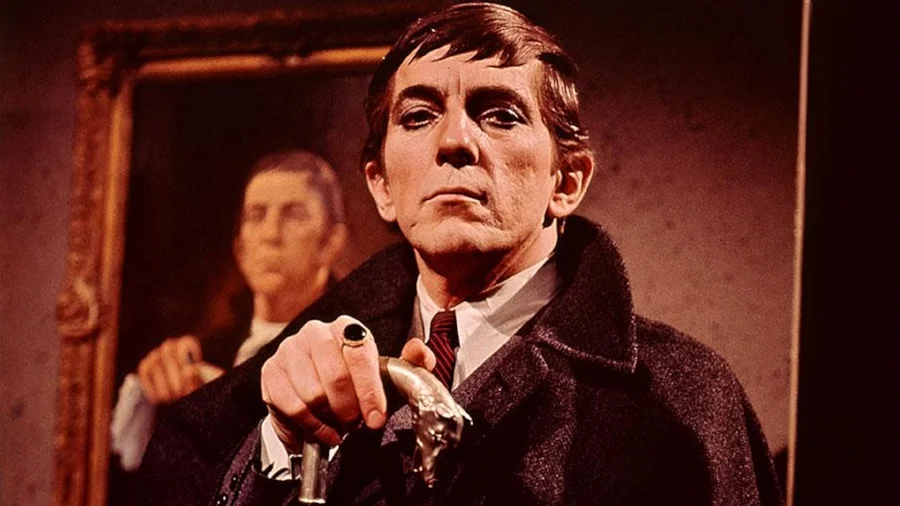
Barnabas Collins a swingin’ Mod Mainer, Vampire
The second story reverses the frame: it tells what’s it like to be in the bubble. The first story suggested that it’s great to be in the convention bubble. But this story suggests that maybe it’s more complex than shared references, in-jokes, cleverness, and a sense of belonging. It reveals that even when one is in within the in group, they can come to be very eager to leave. The story hinges on John going to a “Dark Shadows” convention in NYC – a convention celebrating (and check the writing here):
the slowest, creakiest TV show ever. Dark Shadows, you might recall, is the Gothic soap opera that ran from 1966 to 1971. The main character is an avuncular vampire named Barnabas Collins. The storyline shifts from the 19th century to groovy ’60s America at its most mod. Its kind of Wuthering Heights meets Austin Powers.
John, the interviewee, perfectly relates that there’s an inevitable moment when those inside the convention bubble get sick of themselves, sick of each other and yearn for the variety that civilian life offers. Desperate for escape from the monoculture, in the final waning hours of the convention, John and a fellow attendee reach for the safest smalltalk…like…sports in one’s hometown.
At that point in my career, I hadn’t attended any conventions and hadn’t lived this nametag-on-lanyard life first-hand. But, as this blog will attest, after several go-rounds at RubyConf and other conferences, I resonate with how suffocating the convention bubble life gets after a certain point. By the time you’re in the airport terminal waiting room with destination home, you’re hoping that those seated next to you are civilians — doctors, lawyers, chefs, artists, jugglers, sports fans.
Act II
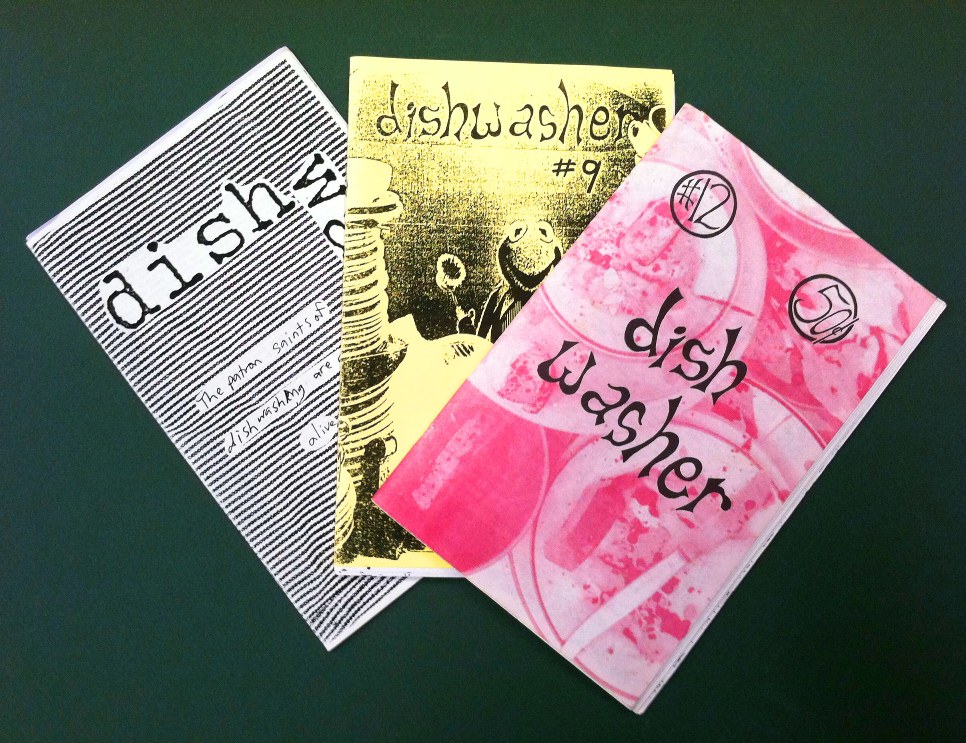
‘Dishwasher’: a ‘zine (hand-made magazine)
The third story is about Dishwasher Pete, a man and ‘zine author on a quest to wash dishes in all fifty states. Here, the theme works to reveal the strangeness of the in-group when visited by someone who’s just barely out of it.
Pete, the wage worker for the “owners” of restaurants, finds himself among them as they think everyone is just like them. Shoulder-to-shoulder with them on the convention floor, eyeing new Hobart equipment, he regards them as an anthropologist might consider a newly discovered tribe in the Amazon. Seeing them in this context, some of the class struggle inherent in his most-laborious of jobs gets replaced with a sense of wonder. These aren’t scheming mustache-twirling, health-care coverage fighting das kapitalist caricatures. Instead, they have a clueless, selfish, and tin-eared vibe. They look like Mardi Gras punters or millionaires raiding the sample booth at Costco. Pete sees conventioneers clamoring “to receive free plastic key chains…” and is baffled and enlightened.
And Pete shows that some in-groups and conventions are malignant. Pete never says it, but he doesn’t have to. In their bubble of tchotchkes abroad or in their back offices at restaurants at home, they find in the convention the social proof to continue inflicting real economic harm on their labor forces. The same fat cats that would fire you for needing to take a day off to take your child to the doctor are the same who need a dinky keyring for their luxury car’s key. Years before it became “Mad Men” and years before it became a meme, Pete is thinking of how he’s sorry for them.
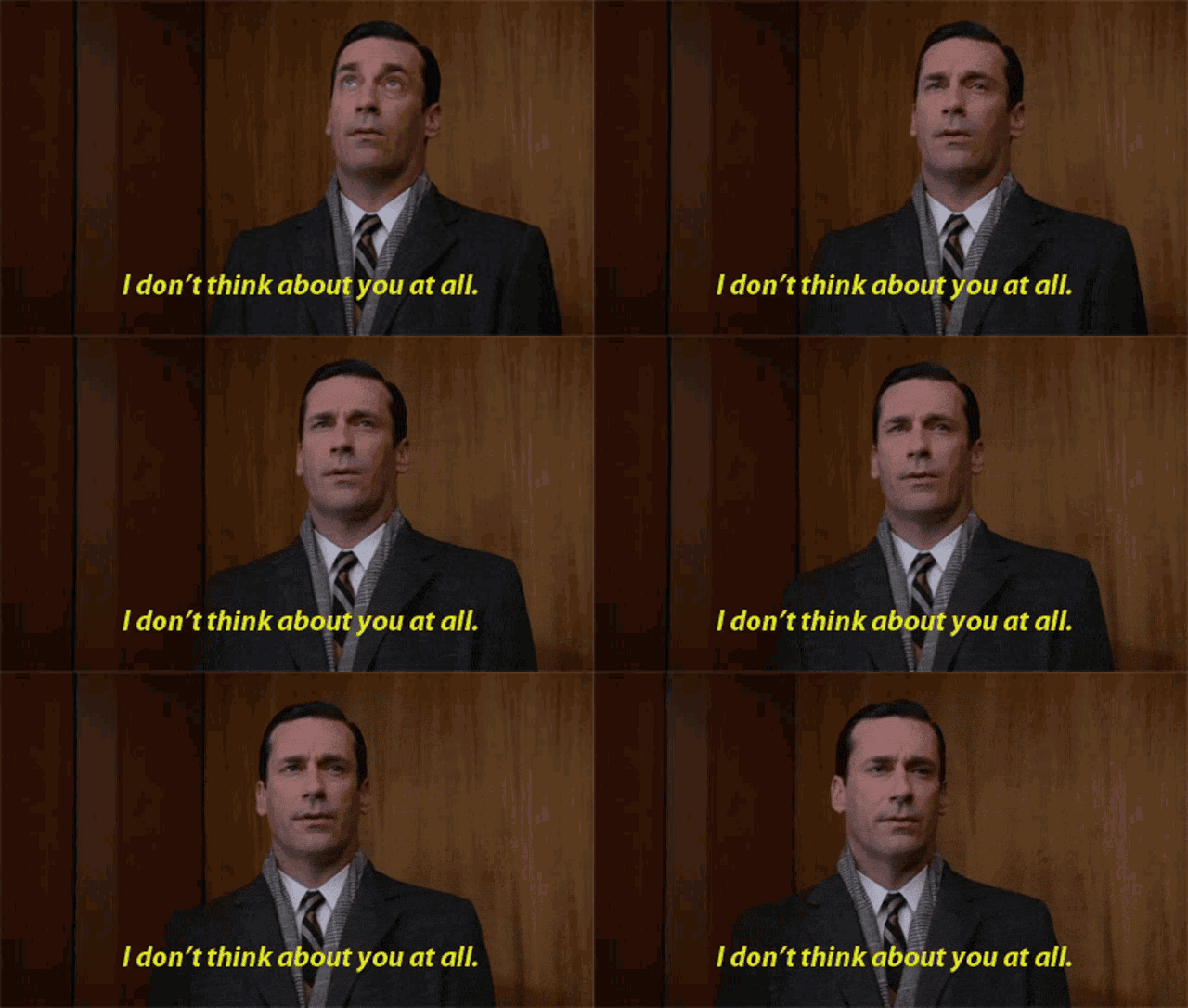
It’s not reciprocal.
And perhaps the ultimate justification for the in-group’s status quo (convention as tunnel-vision) is when Pete asks the convention’s distinguished guest speaker, former Republican candidate Bob Dole, to give advice to any dishwashers in the audience. I’ll not quote Dole’s advice here, to do so is to do violence against a brilliant climax to an ostensibly, very laid-back “foreigner abroad” story. In the same way Dole’s infuriating and doddering response stuck with Pete for hours, Pete’s story has stuck with me for years.
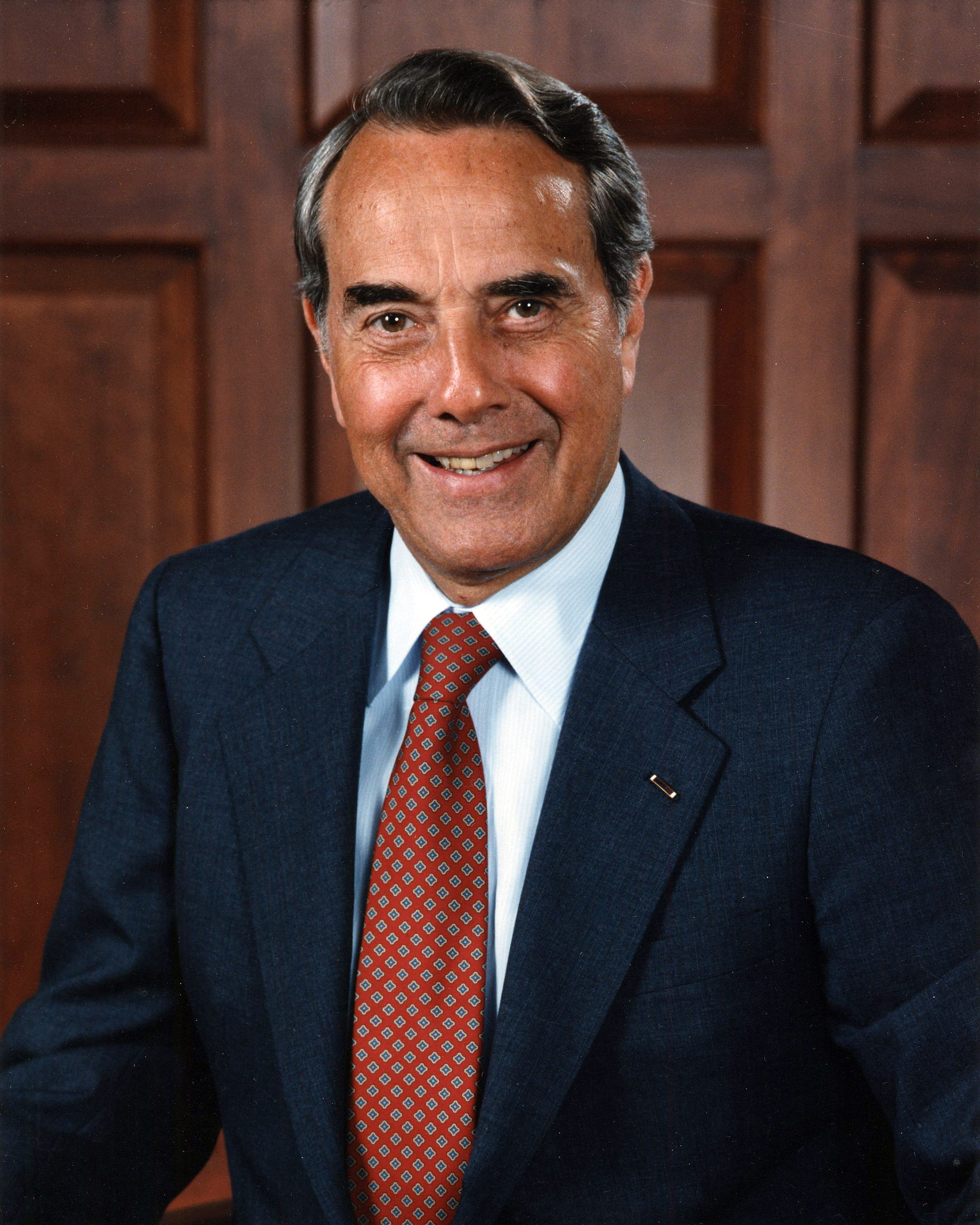
For the young’ns. Bob Dole. Tin ear, great tan
Act III
But the final Act was the one that rent my heart. John Perry Barlow, Grateful Dead lyricist and electronic rights freedom-fighter (in attendance for the NeXT roast for Steve Jobs) locks eyes on a woman (an attendee at the American Psychiatric Association) and experiences love at first sight – when world collide.
As I was probably slotting DVDs of Linux distributions on my home lab at the time, I seem to recall stopping to think: “Do you really fall in love at Unix conventions?” About this time, Barlow dropped one of my favorite lines about computing ever:
And NeXT users– NeXT was one of the only computers I’ve ever been around where the whole notion of design was really important to the product– elegance of design. And it attracted the strangest kind of hybrid, which was sort of like UNIX weenies by Armani combination.
I knew at that moment, I wanted nothing more than to be a Unix weenie by Armani. My love of my time in Europe, my love of urbanism, my love of black clothes, my love of command lines.

A NeXT Cube Workstation

An elegant development environment
It was like the spell that would conjure in just a few short years Mac OSX into my future.
After that quip, Barlow told the tale of how he at that convention met a vivacious blonde. Immediately they began speaking with an awareness of the eerie magnetism between them. Moments later, they discovered that she’d just lined up an apartment in New York, where he, too, dwelled. Unbeknownst to either, she was moving into his building.
A whirlwind romance ensues. Having felt Fate’s breath in two love affairs myself, I knew exactly what he was feeling – the bafflement, the eeriness.
And then she dies.
The dead air after that moment stuns the host. It stunned me. I cried.
The dialogue slowly recovers and Barlow seems oddly…Grateful Dead about it. There’s clearly pain, but there’s also humor and perhaps a Buddhist-like joy as he delivers the lines:
I feel an ability to attach on a moment to moment basis that is completely unlike anything that I felt prior to that. And I think it’s sometimes a little disconcerting to other people, because it’s genuine on my side. And people are not used to having somebody just dock emotionally that instantaneously. For one thing, I feel like I can see their souls. Their souls are visible to me.
…
But anyway, it was a hell of a convention, you know? I mean, I’m sure glad I went to [it].
It’s a set of stories that’s well worth your time.